Welcome

Welcome to Dashing Hamsters. I created this website back in 2005, initially to have a place to share my love of hamsters. Throughout the years I have come across a lot of information that just often doesn't match up. Care standards and information are outdated, and these little creatures are misunderstood by many. So I decided to make this website as more than just a hamster lover's website, but a hamster website for modern owners who are looking for up to date advice on how to care for and understand their beloved hamsters. On DH you can learn about hamsters, see some cute pictures and read through a hamster filled blog.
Showing posts with label Supplies. Show all posts

Friday, June 15, 2012

Dioxins in Carefresh a Valid Concern?

Recently I came across someone talking about Carefresh and similar pulp-based products (Boxo, Clean and Cozy, etc) being dangerous due to high levels of dioxins within the substrate from where they are made. The exact phrase being that Carefresh is "repackaged sludge from the sewer stream of pulp mills". This phrase is inaccurate as this is not quite what wood pulp is. These beddings are made form wood pulp, which is the product of the tree that cannot be used to make paper products. It was often put into landfills and other let to go to waste before. It is not "sludge from the sewer", it is taken before that point is reached. It is also not recycled paper and contains no ink.

The main concern brought up was that during this process dioxins (Wiki: Dioxins) were put into the wood pulp. Thus our small animals would be exposed to these deadly compounds.

This concern is not a new one it seems, searching for more information many forums came up with similar posts about "sewer sludge" though all from different times, the oldest one I found dating back to 2003. Finally I found a page that was put up by a pine mill company that promoted pine over wood pulp based substrates. (Please see: Toxicity of Pine and Cedar Shavings). This page seems to be the source of this rumour. Yet the question still needed to be considered: Are wood-pulp based substrates really safe?

Looking at the Carefresh Website they say that "Carefresh is non-toxic, sanitised and it has been tested for dioxins. As a result Carefresh is guaranteed to be clean, safe and natural."

Humans come in contact with dioxins on a daily basis, mostly through the food that we eat. It is safe to presume that living such a close lifestyle to humans, that domestic animals, such as hamsters, would also be exposed to low levels of dioxins. Dioxin emissions have gone down a lot in more recent years and should continue to do so, meanwhile the long-living dioxins that are here already will eventually reach the end of their lifespan. It would seem that the scare of dioxins in pulp-based substrates is something that was twisted and stretched in order to promote another companies product (i.e. pine shavings). If dioxins levels in these substrates were at a level to cause issues than it would seem imperative, (if not for the animal's sake but for the human's sake), that a company would find a different way to work with this product. Based on all that I have read along with the questionable source of this dioxin-in-Carefresh information that this is not something to worry about. It seems surprising that if dioxins are an issue that it has not been found to cause issues in animals at some point. Carefresh is used in some labs after all, it would make sense that they would want a substrate that would not put their study in jeopardy.

Tuesday, May 29, 2012

Papier Mache Playground Guide

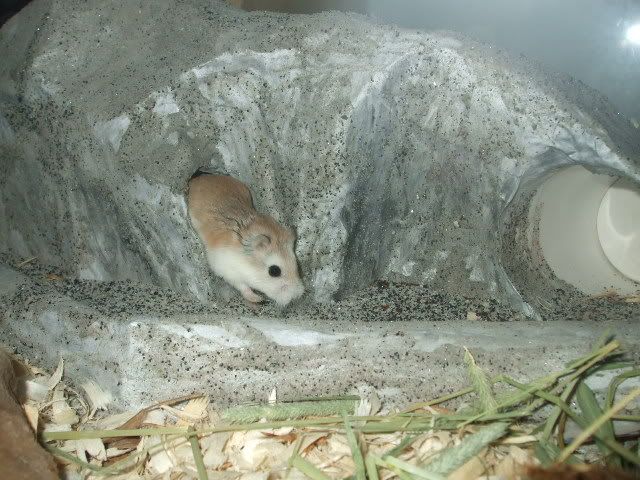
Inspired by a papier mache sand dune creation I learned about on a gerbil website here: Gerbil Playground I took those instructions and made them more pet friendly so that the playground could be used inside of a cage. Small single hide-out dunes will probably fit better into most cage set ups, but they can still be used for out of the cage fun!


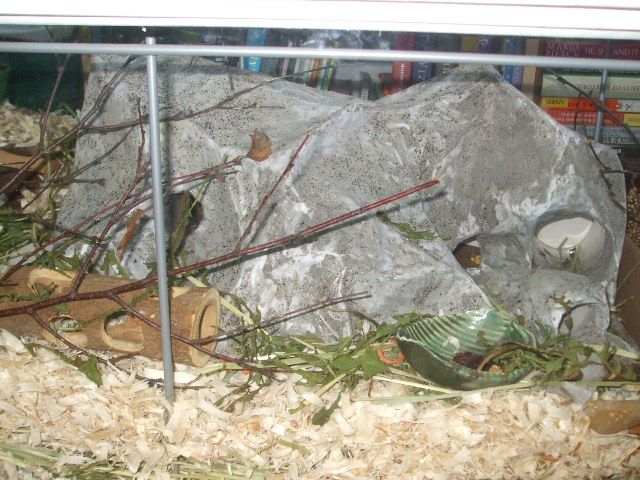
An example of a papier mache playground inside of a cage.
List of materials:


Tape (optional)
1 Cardboard sheet
Assorted Small cardboard boxes
Assorted Toilet paper tubes
Several Newspapers (be sure ink is soy/vegetable based)
Blank white printing paper (optional)
Paint (optional) (be sure it is nontoxic)
1-2 cups of sand (playground sand, chinchilla sand or calcium carbonate sand)
1 cup of Baking Flour
1/4 teaspoon of Salt
3 cups of water


1. The first step is to get a base for you playground. If it is going into a cage than be sure to measure everything out first, or you may end up with a playground that doesn't fit!


2. Take your assorted cardboard materials and toilet paper tubes and arrange them on your base. 

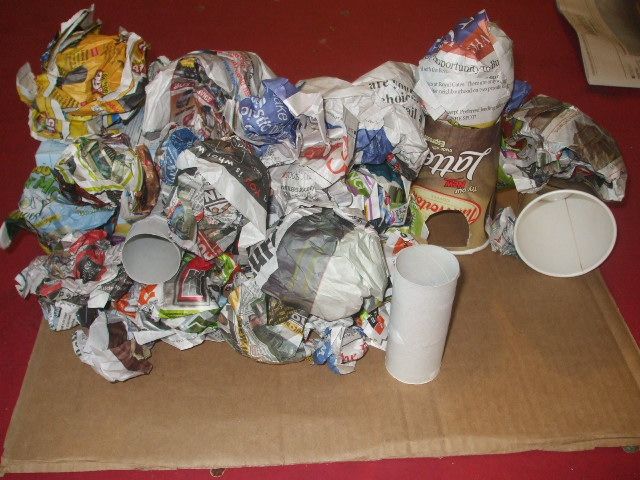
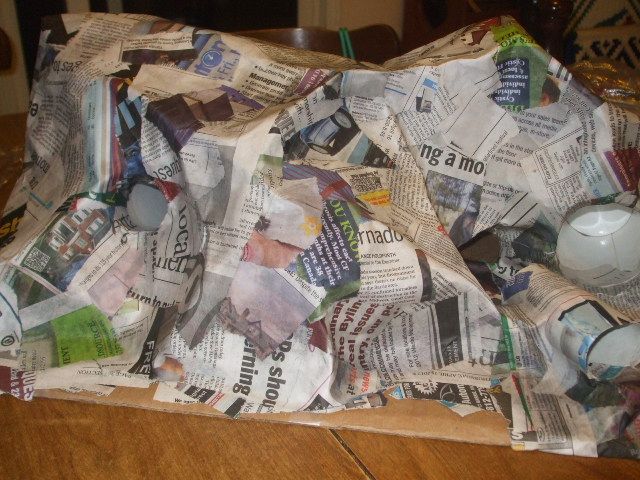
3. Begin to fill in the empty spaces between and around your base structures with newspaper balls and rolls.


Once complete it should begin to take a basic shape. Remember this is meant to be creative so make it as big as you want and use your imagination:


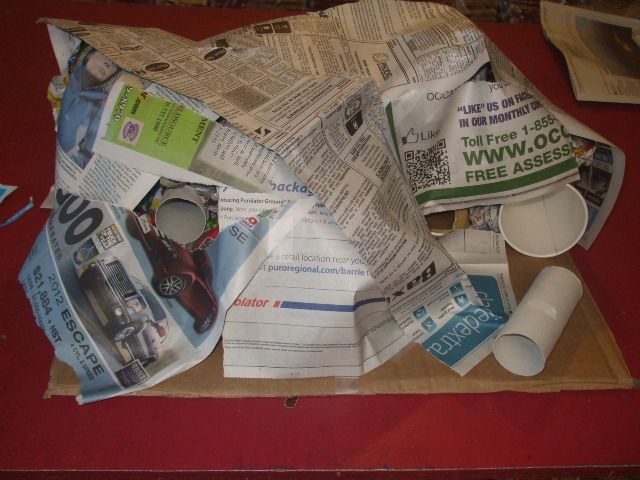
4. Cover this with a couple of sheets of newspapers to hold everything in place for when you start the actual papier macheing part. You can tape the pieces down if necessary, I usually removed the tape once I started papier macheing.


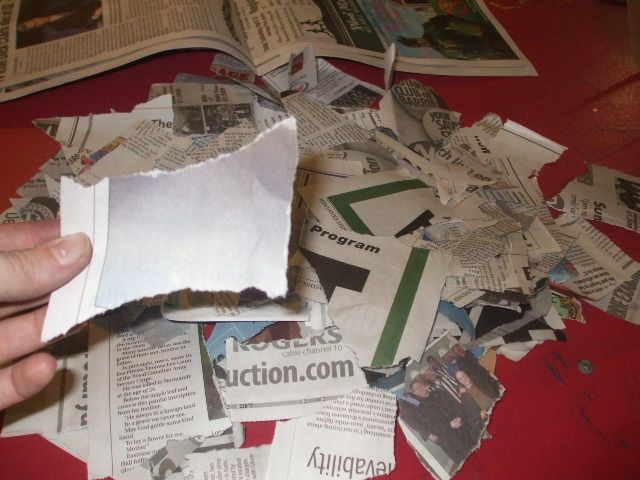
5. Rip up all of your sheets of newspaper. You can cut them, but ripping them helps them stay down better as the edges are ragged and hold down better.


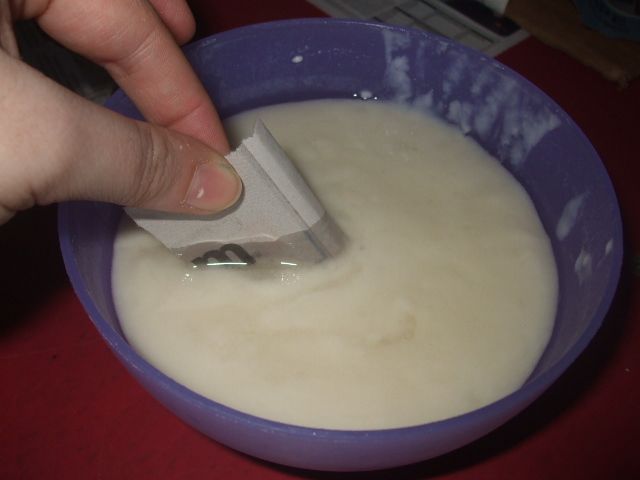
6. Now is time to make the paste. Take the flour and mix it with one cup of the water in a bowl add the salt in now too. The salt will help prevent mold from forming. In a separate sauce pan boil the remaining two cups of water. Once it is boiled add the water to the flour-water mix and stir. Than add all of the mix back into the saucepan and heat on medium high for 1-2 minutes until the paste has thickened. Let it cool before starting as it will be hot. When ready just dip a piece of newspaper into the paste, strain off the excess and begin to paste it onto the playground.


7. I recommend at least three layers of newspaper. Be sure to let each layer dry before moving on to the next one. The thicker you go the stronger it will be.


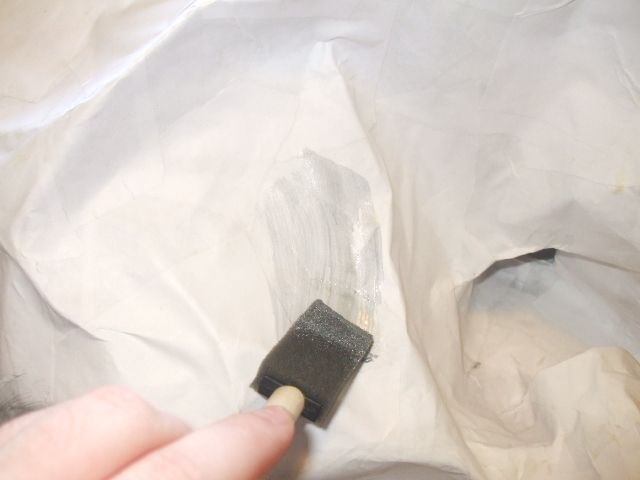
8. The last layer (or two) I would use blank printing paper so that the newspaper does not show through afterward.


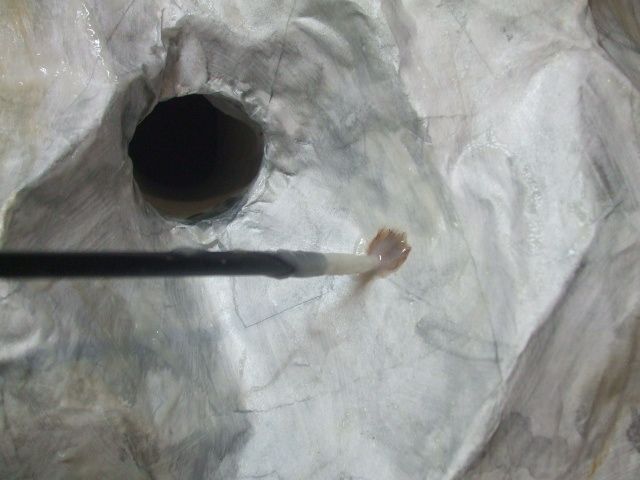
9. Now after your last layer is dry you can do something to add a little extra. This is optional, but using nontoxic acrylic paint to add some colour to the piece really does help to make it look better.


10. Once the paint is dry (or your last layer is dry)  take your paste out again and begin to cover your piece with it in an even coat. I use a paintbrush sometimes, but using your hands it a lot quicker.


11. Take your piece and put it on top off a plastic bag, because this will get messy. With your piece still wet from that layer of paste you painted on, pour the sand over it. Ensure that the sand is coating everything.


12. Let your masterpiece dry and than add it to your hamster's home or put it in their playpen. Either way your hamster will have a blast!


**Caution**
Some people have mentioned that they had mold issues with this, I have yet to have any such issues. Adding salt to the paste mix can help prevent this though.

Friday, January 20, 2012

Campaign for the 8.5" Silent Spinner

We all love hamsters and so we all know that they need wheels. And since many of us have our hamsters in our room, we like to have a good, silent wheel. I remember when the Silent Spinner first made it's way on the shelves. It was asleep saver. The first actually (generally) silent wheel. Soon it was realized that the sizes were all off. 4.5" Silent Spinners are too small for dwarf and Chinese hamsters (and mice for that matter too) and the 6.5" wheel is far too small for the majority of full grown Syrian hamsters. Yet they are sold as the perfect size:

6.5" diameter wheel is ideal for hamsters, mice, gerbils, or other small animals
Source: http://www.superpetusa.com/product-list/silent-spinner-wheel-regular.htm

Who hasn't wished for a bigger Silent Spinner? Sure you can just go and buy the 12" wheel, but it doesn't fit in all cages and unnecessarily takes up room in the cage. Not many syrians (except perhaps Swedish syrians, I'm told) actually need a 12" wheel anyway. While there are other wheels that are fairly silent they aren't always accessible to most people, while the Silent Spinner is pretty common.

Back in 2007 the pet rat community, who were all fans of Midwest's Ferret Nation cage, campaigned to have Midwest create a rat-friendly version, the Rat Nation. It worked, though was instead called the Critter Nation. Rat lovers all over the world e-mailed them and they got a spiffy, rat-specific cage. A whole new cage. Now a wheel size upgrade can't be too much to ask for in comparison, can it?

So hamster lovers, (even if you don't use the Silent Spinner yourself or if you don't have syrian hamsters to worry about please consider helping out anyway. You never know what the future might hold, right?) please contact the Super Pet Company and let them know of your interest in an 8.5" Silent Spinner. If only a few people e-mail than it won't do much, they need to see that people are really interested in this so that they know it won't be a waste of money to look into and create. So please ask other hamster lovers, re-post on hamster forums, etc. If we want this to happen then we need more than a few e-mails.

You can even look at it as helping hamsters. Think of the ignorant and misinformed people that buy the 6.5" Silent Spinner thinking it perfect for their syrian; meanwhile their syrian quickly outgrows it and then is left to gain back problems or to go without a useable wheel. Yet had the 8.5" Silent Spinner been there, marked for Syrian hamsters it would be one less issue for that hamster, right?

Consider this while writing perhaps:

-They are a business first and foremost so appeal to that side of them. You have enjoyed their products, like what they have but cannot continue to buy their products nor recommend them to anyone else so long as the wheel is too small to be safe. They don't want to lose money.
-Explain what the problem is and recommend how you think it could be better (i.e it's too small, bad for their backs, needs to be bigger)
-Be polite! Demanding and going 'crazy' on them will not help
-If you have a picture of a syrian on a Silent Spinner that shows it's back curving than consider adding this too.

You can contact them through this e-mail address (the easiest way):
customerservice@superpet.net

Or if you want to send them a physical letter then this is their contact address:

Super Pet
Attn: Customer Service
2121 Touhy Ave
Elk Grove Village, IL
60007

Or if you want to call they have a number too:
1-847-956-1130

If you have any suggestions for what else should be included in the letters or what we should be asking for then please say it, hehe. Doing away with the 4.5" wheel and trading it with the 8.5" wheel (the the 6.5" becomes the new mini) seems like the ideal way to go. So please do your part and send an e-mail. It doesn't need to be long, just get the facts down. Thank you for your support!

~Holly, Rory and Bones

Wednesday, July 20, 2011

Toxicity of Pine and Cedar Shavings


by Debbie "The Rat Lady" Ducommun
If they author wishes that I remove it then please let me know. I found it here: http://www.ratfanclub.org/litters.html
     There is strong scientific evidence that pine and cedar shavings are harmful to the health of rodents. Both these softwood shavings give off aromatic hydrocarbons (phenols) and acids that are toxic. The phenols, which give the shavings their scent, are the reason that cedar repels fleas and moths and why pine-oil is the major ingredient in Pine-sol brand disinfectant. In the laboratory, autoclaved pine and cedar shavings have been shown to inhibit the growth of micro-organisms (Reference 1). When animals are exposed to softwood shavings the aromatic hydrocarbons are absorbed through the respiratory tract and enter the blood.

     The acids given off by pine and cedar shavings are very damaging to the respiratory tract. These acids can actually destroy cells that line the lungs and trachea (2). This has significant implications for rats since the most common diseases in pet rats are respiratory infections. Many owners of pet rats have reported the improvement of respiratory problems when they have switched their pets to a bedding other than pine or cedar shavings.
      Pine and cedar toxins also affect humans and other animals. People who work in cedar and pine sawmills have a much higher incidence of asthma compared to workers in other dusty environments or those without any dust exposure (3, 4). Another study found that chickens kept on softwood shavings had a higher incidence of respiratory infections (5).
      Pine and cedar toxins affect more than the respiratory tract. Several studies (6,7,8,9) have shown that rodents kept on softwood beddings have elevated levels of liver enzymes. The liver is the body's detoxification system, and elevated liver enzymes indicate that the body is working harder to eliminate toxins. In mice these enzymes started rising after only 24 hours exposure to cedar shavings and only returned to normal when the mice were away from the shavings for 12 days (8.). If pine or cedar shavings are heat-treated or soaked in a solvent, so that some of the phenols are removed, the effects are not as great, but still occur (8, 9).
      One study showed that the mortality of rat pups raised on cedar shavings was tremendously high compared to rat pups raised on corn cob or aspen shavings. Of the pups raised on cedar shavings, 56% were dead by 2 weeks of age, while only 0.01% of the pups raised on the other beddings died. The cedar-raised pups also weighed about 23% less than the other pups (10).
      Exposure to toxins is a stress on the body and constant stress can result in depressed or altered immune function. A study done in 1991 (1) found that mice kept on pine shavings for only a month had a more highly reactive immune response. Mice kept on pine shavings for 8 months developed abnormally enlarged livers. This same study found that mice housed on pine shavings also had a decrease in reproduction rate. When given free choice of beddings, rats and mice reject pine and cedar shavings in favor of any other type of beddings.
      There are also other dangers from softwood shavings. A study found that people in the woodworking industry who are exposed to softwood dust have a higher incidence of squamous cell cancers of the respiratory tract (11). A German study found that workers exposed to pine dust had more than a three-fold increased risk of glottal cancer (12).
Rebutal to Defense of Pine and Cedar

      I would now like to address some points occasionally brought up in defense of pine and cedar shavings. It has been said that studies done on laboratory rodents and farm chickens cannot apply to pet rodents because the study conditions would not have as much ventilation as that in a home environment. However, The House Rabbit Journal (13) reported that several pet rabbits also showed elevated liver enzyme levels when softwood shavings were used in their litter boxes. When other litter was substituted, the enzyme levels returned to normal. Two of these rabbits had liver disease when autopsied. Many House Rabbit Society members reported deaths of their rabbits due to liver disease and all these rabbits had been exposed to softwood shavings. Rabbits are generally less exposed to their litter boxes than rodents are to the beddings in their cage, so increased ventilation does not mean the liver won't be affected.
      Cedar and pine shavings are often recommended because their pleasant scent masks animal smells and repels skin parasites. However, there are plenty of non-toxic alternatives which can help combat animal smells, ranging from highly effective litters and beddings made from grain by-products and paper fibers, to special odor-eliminating sprays. And ivermectin is a much more effective and safe treatment for parasites than exposing an animal to constant levels of toxins. One or two beneficial properties of a product cannot make up for other dangerous properties.
     Several people have claimed that their pet rodents have always been kept on pine or cedar with no adverse effects. However, animals with elevated liver enzymes do not show any symptoms, and unless these animals received full autopsies at death with no sign of enlarged livers or liver disfunction, respiratory infection, or altered immune system, how can they claim that the pine or cedar did not affect them?
     Some claim that pine shavings which are heat-treated are safe because the heat drives off the toxins. There are currently products being sold, notably All-Pet Pine, Feline Pine, and Pine Fresh, that claim to be free of toxins. However, the studies in references 8 and 9 found that heat treatment did not remove all the toxins from the wood. Heat-treated shavings still caused a rise in liver enzymes in rats and mice.
      Pine and cedar shavings are often defended with the claim that customers are not forced to buy them. However, most rodent owners are not aware of the toxins in pine and cedar shavings. They assume that if a product is offered for sale, it must be safe. But just because pine and cedar shavings have been traditional and popular beddings does not mean they are safe. There is strong scientific evidence that pine and cedar shavings cause harm to rodents. Because of the toxic effects of softwood shavings, laboratories have pretty much stopped using them for their animals. It is time for owners of pet rodents to do the same! With so many safe alternative beddings available, it cannot be recommended that pine and cedar shavings be used for small animal beddings.

References

1. Odynets, A. et al. (1991) Beddings for Laboratory Animals: Criteria of Biological Evaluation. Lab. Zyhvotnye, 1 (3) p. 70-6
2. Ayars GH, Altman LC, Frazier CE, Chi EY. (1989) The toxicity of constituents of cedar and pine woods to pulmonary epithelium. Journal of Allergy and Clinical Immunology 83, pg. 610-18
3. Shamssain MH. (1992) Pulmonary function and symptoms in workers exposed to wood dust. Thorax, 47, pg. 84-87
4. Siracusa A, et al. (1995) Prevalence and predictors of asthma in working groups in British Columbia. American Journal of Industrial Medicine, 28, pg. 411-423
5. Seegar, K.C. Tomhave, A.E. and Lucas, W.C. (1951) A comparison of litters used for broiler production. Delaware Agric. Exp. Stn., Bulletin, 289
6. Ferguson, H.C. (1966) Effect of red cedar chip bedding on hexobarbital and pentobarbital sleep time. Journal of Pharm. Science, 55 p.1142-8
7. Jori, A. et al. (1969) Effect of Essential Oils on Drug Metabolism. Biochemical Pharmacology, 18 p. 2081-5
8. Vesell, Elliot S. (1967) Induction of Drug-Metabolizing Enzymes in Liver Microsomes of Mice and Rats by Softwood Bedding. Science, 157 p. 1057-8
9. Weichbrod, Robert H. et al, (1988) Effects of Cage Beddings on Microsomal Oxidative Enzymes in Rat Liver. Laboratory Animal Science, 38 (3) p. 296-8
10. Burkhart, Carol A. & Robinson, James L., (1978) High rat pup mortality attributed to the use of cedar-wood shavings as bedding. Laboratory Animals, 12, pg. 221-222
11. Vaughan, T.L. and S. Davis, (1991) Wood Dust Exposure and Squamous Cell Cancers of the Upper Respiratory Tract. American Journal of Epidemiology, 133 (6), p. 560-4
12. Maier H, et al. (1992) Laryngeal cancer and occupation--Results of the Heidelberg laryngeal cancer study [German]. HNO, 40, pg. 44-51
13. Harriman, Marinell (1989) Litterboxes and Liver Disease. House Rabbit Journal, I (12) p.8-9

Wednesday, April 13, 2011

My Opinion on Exercise Balls

Hamster Balls - Cruel?

     I have heard much debate as to whether run around balls are cruel. In my experience I have yet to find evidence of that if they are used properly. I have had a large amount of hamsters over the years and everyone of them has enjoyed spending time in their run around ball. Yet there are still those that argue that these toys are cruel. So I wanted to share my views on how the run around ball is not cruel, here are some of the most common arguments made against the Hamster ball.

Hamster balls have poor ventilation.
Properly made hamster balls have adequate ventilation and are designed so that no toes are caught in the holes. I have yet to ever hear of a hamster that has issues breathing in a hamster ball. Besides that hamsters are not in their balls long enough for ammonia to build up to cause problems with lack of oxygen. Hamsters also live in burrows in the wild, which also have little fresh air and ventilation.

Hamster balls have poor visibility, the hamsters can't see where they are going.
Hamsters have terrible eyesight as it is, they can only see a few inches in front of them. If you are truly worried about this, then buying a clear ball instead of a coloured one would solve this problem.

Hamsters don't enjoy the ball, but they have nowhere else to go so they have to run, which looks like they are enjoying it.
I have seen when hamsters have grown bored of their run around balls. They don't run when they want out; they stop and chew on the ball, go to sleep or start to eat food from their pouches. My hamsters go into the ball on their own terms and when they look bored then they are let out. Playtime in the ball should be supervised anyways. You need to understand your hamster and their body language so that you can understand what they want. After a couple of years it isn't difficult to understand when a hamster is not enjoying something.

The hamster is stuck in the ball until the owner lets it out.
That is why playtime in the ball should always be supervised so that when the hamster does want out the owner can let them out.

When a hamster ball crashes into a wall or an obstacle, it's like a car crash for hamsters.
How so? Hamsters aren't going nearly fast enough for the impact to be so devastating. Most hamsters become good at steering their balls anyways, given time. Some of mine had even figured out the layout of the room, steering themselves with amazing precision.

Playpens are better then balls for exercise.
Playpens are just as good as balls for exercise. I enjoy giving my hamsters the best of both worlds, free roam time and playtime in the ball. The ball allows them to explore further and in a safer environment while time in the playpen is just a good time to play around outside of the cage.

Hamsters are curious and will step into the ball without realizing what they are getting themselves into.
Perhaps the first time yes, but if they enjoy it then they will look forward to going in. They aren't stupid, they know what they like and what they don't like. When I hold the ball up to their cage for them to step into they rush in and try to start going before I can even put the lid on, I find it difficult to see how they hate it.
     In conclusion I believe that hamster exercise balls are excellent toys to provide physical stimulation; provided that they are used in a safe manner. By supervising the hamster while it is in the ball, blocking and eliminating hazards (such as stairs), limiting time spent in the ball, buying a well made ball and ensuring that you are vigilant in watching for signs of stress, discomfort or general displeasure then the supposed dangers of the exercise ball are eliminated. I have found that those against the exercise ball are looking at extreme cases such as hamsters left in their balls for hours at a time, hamster allowed to roll down stairs and other similar stories/videos. The ball is a great toy if used properly.
**A note about hamster balls: I would like to mention something about the run around ball. Let your hamster eat, drink and go to the washroom before allowing them into the ball. Only allow them to run for 15-30 minutes at a time. If they do not like their run-around-ball (they chew on it, go to sleep or pull out food to eat from their cheek pouches, seem distressed) then don't force it on them, find something else to do with them. Always supervise your hamster while it's in the ball, the ball is not a ham-sitter. Block off stairs so that they don't fall down them. Do not force your hamster to run, spin them around while in the ball or push them around - they are in the ball and should run on their terms only.