Welcome

Welcome to Dashing Hamsters. I created this website back in 2005, initially to have a place to share my love of hamsters. Throughout the years I have come across a lot of information that just often doesn't match up. Care standards and information are outdated, and these little creatures are misunderstood by many. So I decided to make this website as more than just a hamster lover's website, but a hamster website for modern owners who are looking for up to date advice on how to care for and understand their beloved hamsters. On DH you can learn about hamsters, see some cute pictures and read through a hamster filled blog.

Friday, June 15, 2012

Dioxins in Carefresh a Valid Concern?

Recently I came across someone talking about Carefresh and similar pulp-based products (Boxo, Clean and Cozy, etc) being dangerous due to high levels of dioxins within the substrate from where they are made. The exact phrase being that Carefresh is "repackaged sludge from the sewer stream of pulp mills". This phrase is inaccurate as this is not quite what wood pulp is. These beddings are made form wood pulp, which is the product of the tree that cannot be used to make paper products. It was often put into landfills and other let to go to waste before. It is not "sludge from the sewer", it is taken before that point is reached. It is also not recycled paper and contains no ink.

The main concern brought up was that during this process dioxins (Wiki: Dioxins) were put into the wood pulp. Thus our small animals would be exposed to these deadly compounds.

This concern is not a new one it seems, searching for more information many forums came up with similar posts about "sewer sludge" though all from different times, the oldest one I found dating back to 2003. Finally I found a page that was put up by a pine mill company that promoted pine over wood pulp based substrates. (Please see: Toxicity of Pine and Cedar Shavings). This page seems to be the source of this rumour. Yet the question still needed to be considered: Are wood-pulp based substrates really safe?

Looking at the Carefresh Website they say that "Carefresh is non-toxic, sanitised and it has been tested for dioxins. As a result Carefresh is guaranteed to be clean, safe and natural."

Humans come in contact with dioxins on a daily basis, mostly through the food that we eat. It is safe to presume that living such a close lifestyle to humans, that domestic animals, such as hamsters, would also be exposed to low levels of dioxins. Dioxin emissions have gone down a lot in more recent years and should continue to do so, meanwhile the long-living dioxins that are here already will eventually reach the end of their lifespan. It would seem that the scare of dioxins in pulp-based substrates is something that was twisted and stretched in order to promote another companies product (i.e. pine shavings). If dioxins levels in these substrates were at a level to cause issues than it would seem imperative, (if not for the animal's sake but for the human's sake), that a company would find a different way to work with this product. Based on all that I have read along with the questionable source of this dioxin-in-Carefresh information that this is not something to worry about. It seems surprising that if dioxins are an issue that it has not been found to cause issues in animals at some point. Carefresh is used in some labs after all, it would make sense that they would want a substrate that would not put their study in jeopardy.

Tuesday, May 29, 2012

Papier Mache Playground Guide

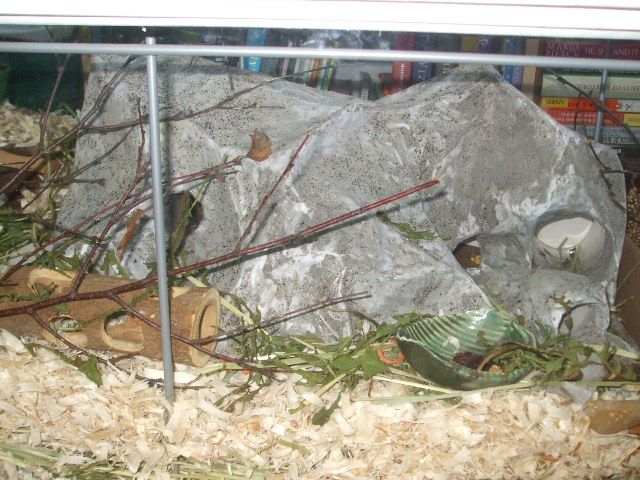
Inspired by a papier mache sand dune creation I learned about on a gerbil website here: Gerbil Playground I took those instructions and made them more pet friendly so that the playground could be used inside of a cage. Small single hide-out dunes will probably fit better into most cage set ups, but they can still be used for out of the cage fun!


An example of a papier mache playground inside of a cage.
List of materials:


Tape (optional)
1 Cardboard sheet
Assorted Small cardboard boxes
Assorted Toilet paper tubes
Several Newspapers (be sure ink is soy/vegetable based)
Blank white printing paper (optional)
Paint (optional) (be sure it is nontoxic)
1-2 cups of sand (playground sand, chinchilla sand or calcium carbonate sand)
1 cup of Baking Flour
1/4 teaspoon of Salt
3 cups of water


1. The first step is to get a base for you playground. If it is going into a cage than be sure to measure everything out first, or you may end up with a playground that doesn't fit!


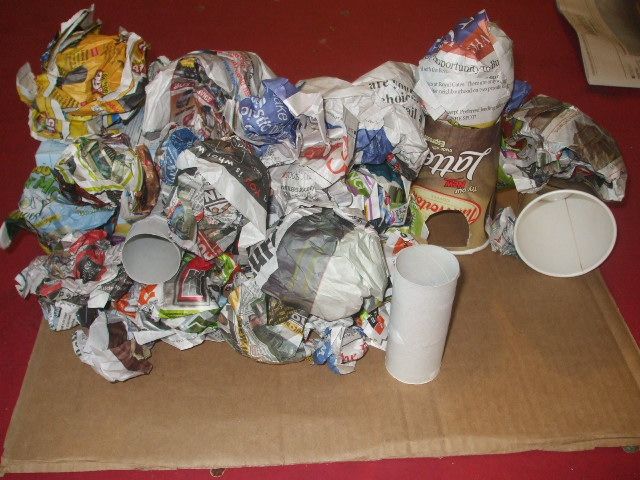
2. Take your assorted cardboard materials and toilet paper tubes and arrange them on your base. 

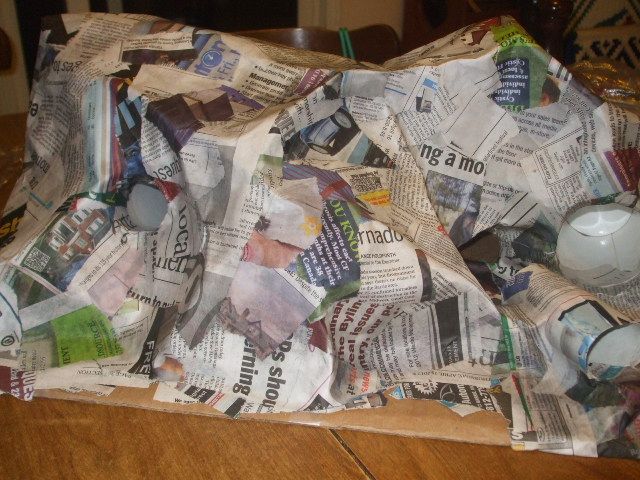
3. Begin to fill in the empty spaces between and around your base structures with newspaper balls and rolls.


Once complete it should begin to take a basic shape. Remember this is meant to be creative so make it as big as you want and use your imagination:


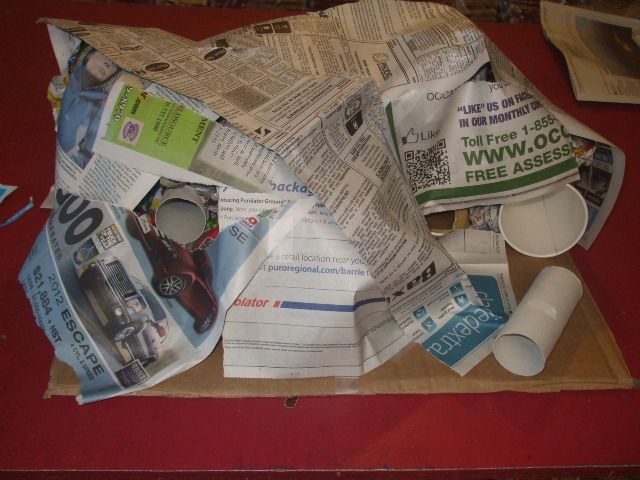
4. Cover this with a couple of sheets of newspapers to hold everything in place for when you start the actual papier macheing part. You can tape the pieces down if necessary, I usually removed the tape once I started papier macheing.


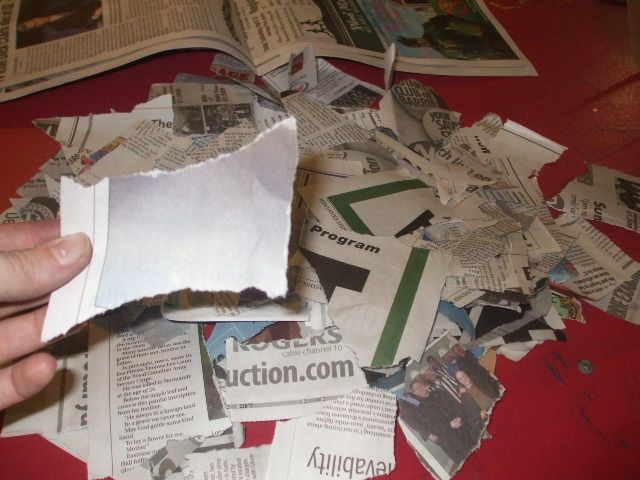
5. Rip up all of your sheets of newspaper. You can cut them, but ripping them helps them stay down better as the edges are ragged and hold down better.


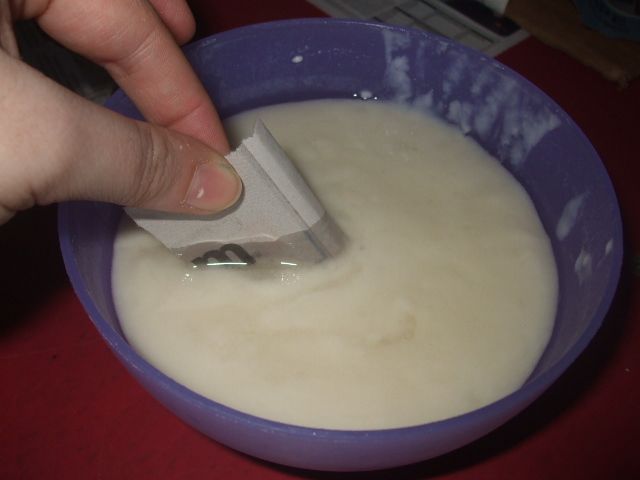
6. Now is time to make the paste. Take the flour and mix it with one cup of the water in a bowl add the salt in now too. The salt will help prevent mold from forming. In a separate sauce pan boil the remaining two cups of water. Once it is boiled add the water to the flour-water mix and stir. Than add all of the mix back into the saucepan and heat on medium high for 1-2 minutes until the paste has thickened. Let it cool before starting as it will be hot. When ready just dip a piece of newspaper into the paste, strain off the excess and begin to paste it onto the playground.


7. I recommend at least three layers of newspaper. Be sure to let each layer dry before moving on to the next one. The thicker you go the stronger it will be.


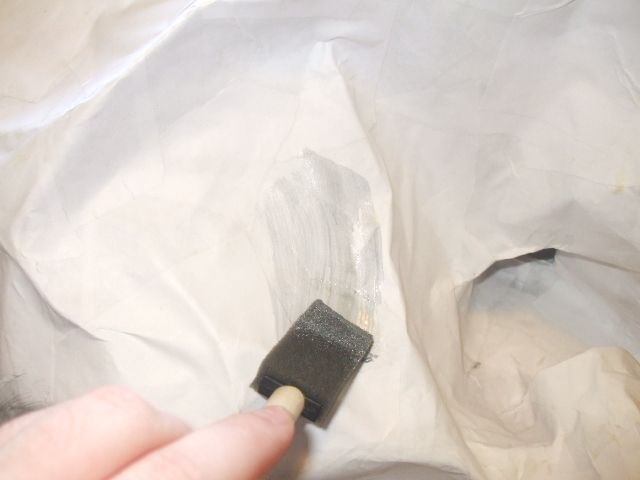
8. The last layer (or two) I would use blank printing paper so that the newspaper does not show through afterward.


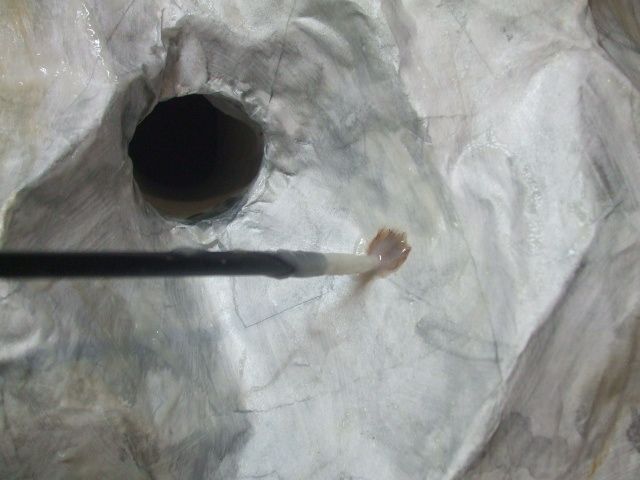
9. Now after your last layer is dry you can do something to add a little extra. This is optional, but using nontoxic acrylic paint to add some colour to the piece really does help to make it look better.


10. Once the paint is dry (or your last layer is dry)  take your paste out again and begin to cover your piece with it in an even coat. I use a paintbrush sometimes, but using your hands it a lot quicker.


11. Take your piece and put it on top off a plastic bag, because this will get messy. With your piece still wet from that layer of paste you painted on, pour the sand over it. Ensure that the sand is coating everything.


12. Let your masterpiece dry and than add it to your hamster's home or put it in their playpen. Either way your hamster will have a blast!


**Caution**
Some people have mentioned that they had mold issues with this, I have yet to have any such issues. Adding salt to the paste mix can help prevent this though.

Saturday, May 26, 2012

Getting Bit is Part of Owning a Hamster

In recent discussion on HamsterHideout.com the question was posed whether it was reasonable to assume that getting bit by a hamster was part of what comes with owning a hamster. It was of no surprise that most everyone agreed, myself included, that it is indeed part of what comes with sharing your life with a hamster. Short of leaving a hamster in it's cage 24/7 with no human interaction, you are in the position to be bitten at any time. Any animal with a mouth is capable of biting after all.


It certainly ties in with the idea that hamsters bite a lot more than other small animals. In one way I do agree, hamsters do tend to be quick to use their teeth if ill at ease. On the other hand I would say 99% of any and all bites I have received , have been given due to my own error. Whether I did not let a sleeping hamster lie, I surprised them, my hands smelled of food or a cage territorial hamster felt their home to be invaded. I have yet to have a hamster bite for no reason. Even nibbles are given for the reason of exploration and understanding, and they often do not hurt. Especially as hamsters are seen as a child's pet, the notion that they bite often is only encouraged as young children who do not understand how to respect an animal's personal space and are often handle the hamster more roughly than they should be get bitten and a negative reputation is built with blame placed upon the hamster.


Biting before a hamster has been socialized or 'tamed' is to be expected as you must work diligently to earn your hamster's trust so that they understand that you are a friend and not an enemy. A taming guide can be found here: Dashing Hamster's Taming Guide.


Learning to read a hamster's body language for signs of distress, can go a long way to avoiding a hamster bite and in doing so you will not cross their threshold for stress, making them feel better about you. Not invading their space if they feel protective over it, food dishes or hoards as well as nests seem to be a sensitive spot for some hamster as an example; washing your hands with non-scented soap to get rid of interesting smells that may be mistaken for actual food or even a threat; letting your presence be known before touching your hamster such as talking to them or rustling some bedding and picking them up from where they can see your hands coming; not waking them and just overall respecting them and their space can definitely reduce the risk for bites. I used to consider hamster bites a regular part of keeping them, but as I have learned to read them better I have gotten bitten less and less over the years. Most importantly do not take the bites personally, your hamster isn't after all so why should you? The meaning behind each bite is situational and dependent upon the hamster, biting does not mean that they "hate" you though. Frequent biting experienced while a hamster is in their home may be linked to cage aggression, which is discussed in depth here: Cage Aggression.


So while biting can be made less likely getting bitten is always a possibility. Whether they will be quick to use their teeth in an attempt to solve their issues or if they will prefer to take things in a more mellow manner will depend upon the individual hamster. They have teeth and therefore they can bite and so it should be assumed that bites can happen, this does not mean that they will happen though. Basically be prepared. Despite it all, the bites are not as frequent as some make it out to be and with some thought into your actions around your hamster there is no reason why you cannot enjoy each other's company.

Sunday, May 6, 2012

Kaytee Recalls Food Due to Salmonella


Heads up everyone, while the food isn't really recommended as it doesn't exactly meet a hamster's needs; I thought it best to share anyways. Kaytee has had to recall some of their foods, including:
The recalled products are 3-pound packages with a “best before” date of 31-Mar-2013 K63 (UPC Code 71859 9994); 5-pound packages with a “best before” date of 03-Apr-2012 K61 (UPC Code 71859-00001); and 25-pound bags with “best before” dates of 31-Mar-20-13 (UPC Code 71859 99995) and, for Petco stores only, 30-Mar-2013 (UPC Code 71859 00000).

No other products or product lots are involved in the recall and no human or pet illnesses have been reported, according to Kaytee.

If you are using any of their food be sure to check the date and codes, especially if your in the US and got it form PetCo.

Saturday, April 28, 2012

Rest Peacefully Rory

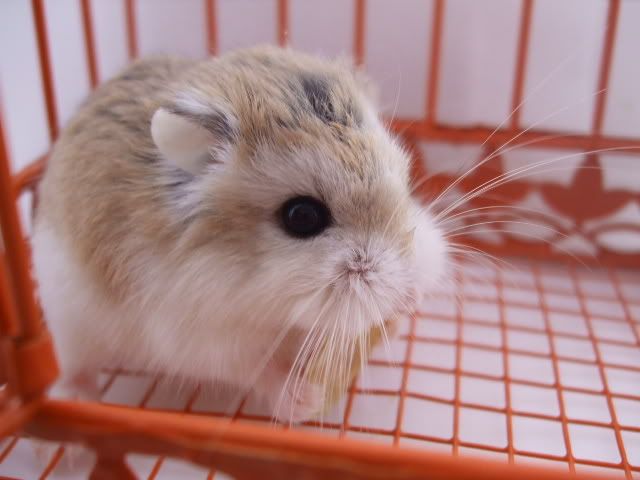
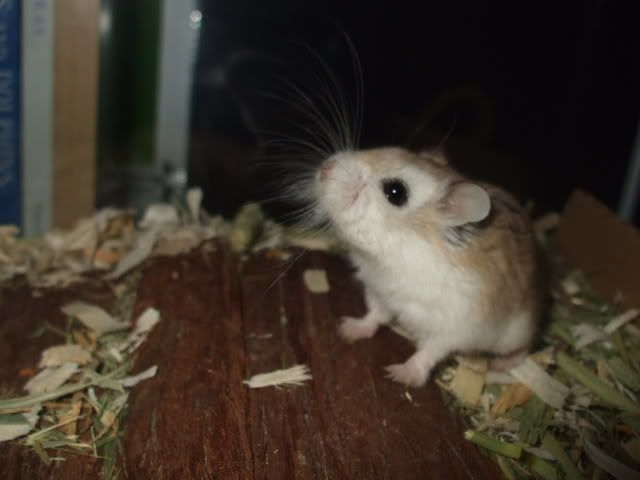
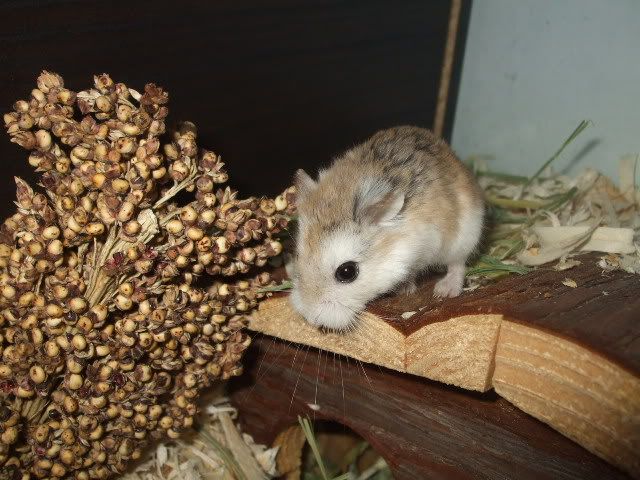
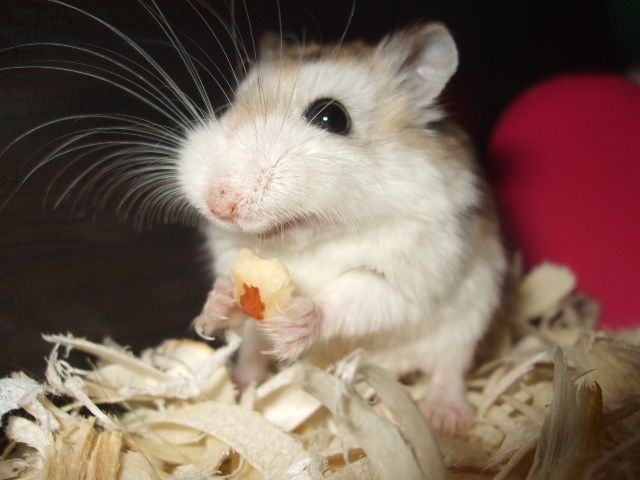
Two years and three days ago I drove over an hour away to adopt two lovely roborovski dwarf hamsters from a girl that got surprised with babies from hamsters that she had received as a present. I remember being surprised at just how small they really were, never having seen robos before. It took me almost 10 minutes to get both of them out of their cage and into the travel cage. They had a long ride to their new home, but settled in well. Rory was always the braver of the two, even though she was quite dependent on Bones. She often didn't mind me handling her for short periods of time and was usually the most cooperative with photo shoots.
Once I found both of them in "hibernation" due to the lack of heat in my room mid-winter. It was the longest amount of time I was ever able to hold them as I warmed them in my hands. Rory came around first, nudging her sister until she woke too.
After having them for about a year I was itching to give these girls a bigger home. They were upgraded to a Detolf cage (a cage built from a detolf shelf from ikea). Rory's favourite pastime (when she could reach it), was hanging upside down from the lid and chewing on the mesh in order to get my attention. Today I found her dead, buried in their aspen. She looked quite peaceful.

Rory and Bones may as well have been attached at the hips. No full memory exists of one without the other. Bones is taking it rather well though. She is eating, drinking and running around just fine and she looks healthy as can be. We are both going to miss Rory, but I am glad that she stuck around as long as she did.


/


Rest In Peace Rory.
Adopted April 23, 2010 -- Passed April 28, 2012

Monday, April 23, 2012

Update on Star Gazing Treatment

I put together an article about 'Star Gazing' in hamsters (found here: Star Gazing) back in December 2011 and I wanted to update on a couple of things in regard to it.

On the forum, 'HamsterHideout' a member under the username of 'Luci' began treatment of her star gazing hamster, Mirabelle, with the drug Trimethoprim Sulfa (mentioned in the original article) and within days reported a noticeable difference in Mirabelle, namely walking normally and capable of better balance. Mirabelle has since passed away, though as far as I know, her death is not believed to be caused from the drug. 

The member, 'missPixy' also mentioned recently that some people have noticed that switching from tap water to bottled water has made a notable difference in the extremity of the symptoms associated with star gazing. I have no evidence to back this up, but it is certainly not something that would be of harm to try.

On a side note: I hope to become more active now that school is out, I am still working on a nutrition article though it may be awhile. In the meantime any suggestions for any thing that I should cover would not be unwelcome. Happy Hamstering and I hope everyone had a wonderful Hamster Day on April 12!